Guide
SB 9 vs. ADU: Which Path Adds More Units to Your California Lot?
SB 9 lot splits vs. ADUs in California: unit counts, owner-occupancy, selling, exclusions and costs compared, with a worked example on a 7,500 sq ft lot.
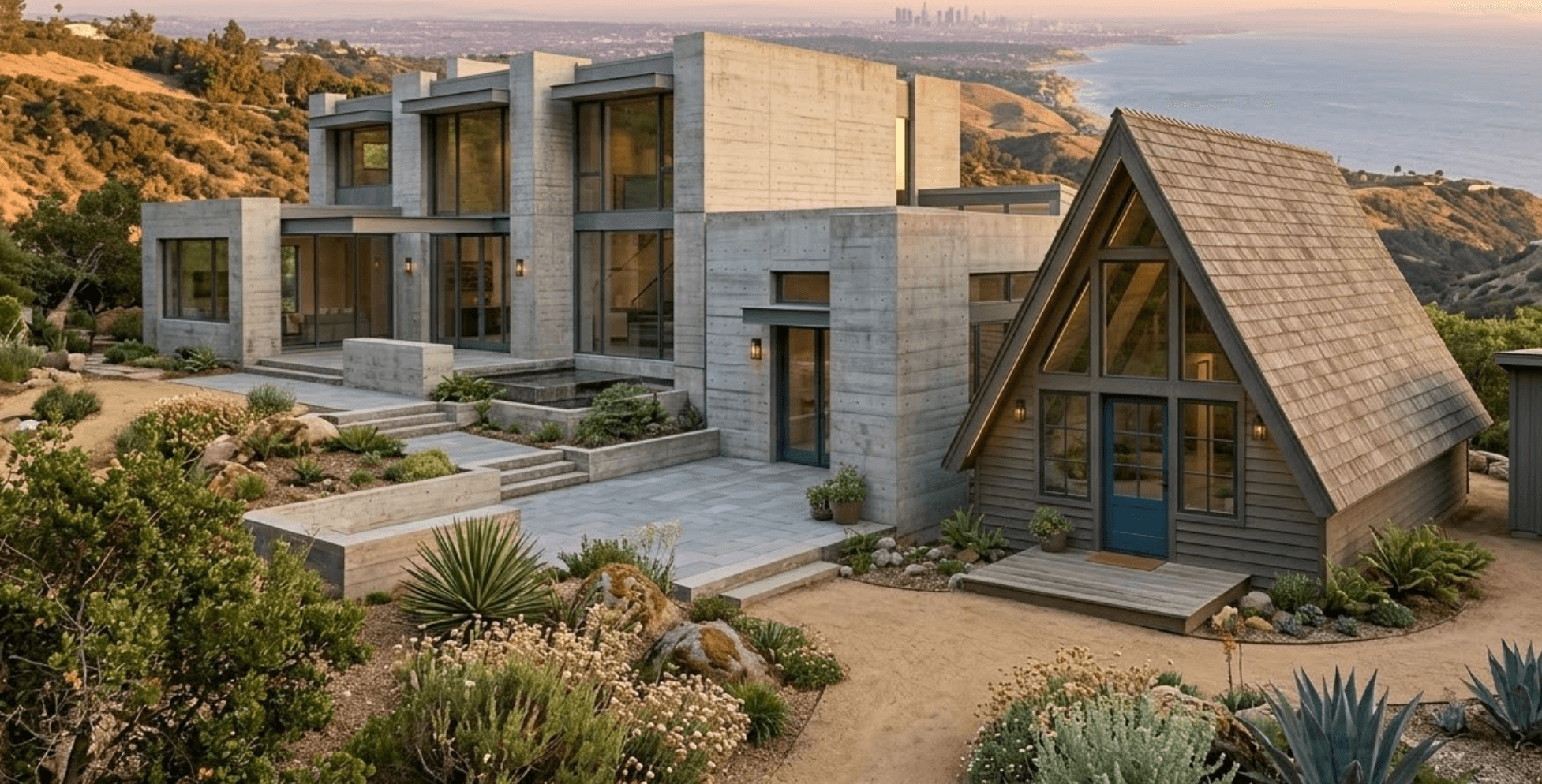
On a typical single-family lot, both paths top out at about four homes: ADU law allows the main house plus up to three ADUs, and an SB 9 lot split allows up to two units on each of two lots. The ADU path is simpler, applies almost everywhere and has no owner-occupancy rule for ADUs. SB 9 is the path to take when you want a separate parcel you can sell, and you are willing to sign a three-year owner-occupancy affidavit and live with more exclusions.
Key takeaways
- ›ADU path: up to 3 units added to a single-family lot, no owner-occupancy for ADUs, one parcel.
- ›SB 9 lot split: two lots of at least 1,200 sq ft each, up to two units per lot, applicant must intend to live there 3 years.
- ›After an SB 9 split, cities do not have to allow ADUs beyond two units per lot.
- ›SB 9 excludes historic districts, most very high fire hazard severity zones and other sensitive sites; ADUs are allowed in far more places.
What does SB 9 allow?
SB 9, in effect since January 1, 2022, gives owners in single-family residential zones two ministerial options, meaning approval with no public hearing or discretionary review if the project meets objective standards:
- ›Two-unit development (Gov. Code §65852.21): up to two primary homes on one single-family lot, which can include the existing house.
- ›Urban lot split (Gov. Code §66411.7): divide one lot into two. Each new lot must be at least 1,200 sq ft (a city can allow smaller) and neither can be smaller than 40% of the original lot, so the split is between 50/50 and roughly 60/40. Each new lot can then have up to two units.
Other rules that apply statewide:
- ›Size floor: a city can apply objective standards, but not ones that would prevent two units of at least 800 sq ft each.
- ›Setbacks: no more than 4 ft on the sides and rear, and none for an existing structure or a rebuild in the same footprint.
- ›Parking: at most one space per unit, and none within half a mile walk of a high-quality transit corridor or major transit stop, or within one block of a car share vehicle.
- ›Owner-occupancy for lot splits: the applicant must sign an affidavit stating they intend to live in one of the units as their principal residence for at least three years after the split is approved.
- ›Rentals: units created under SB 9 cannot be rented for 30 days or less.
Where is SB 9 not allowed?
SB 9 carries more exclusions than ADU law. A site is ineligible if it is, among other things:
- ›In a historic district or a listed historic landmark site
- ›In a very high fire hazard severity zone (and some other state-mapped fire hazard areas), unless the site meets specified fire mitigation measures
- ›Prime farmland, wetlands, or habitat for protected species
- ›In a flood zone or earthquake fault zone, unless the project meets the relevant building standards
- ›A hazardous waste site, or under a conservation easement
SB 9 also cannot be used to demolish more than 25% of the exterior walls of a unit that was rented by a tenant in the past three years, that is rent-restricted, or that was withdrawn from the rental market under the Ellis Act in the past 15 years. You cannot use an urban lot split on a lot that was itself created by an SB 9 split, or split adjacent lots you own. Cities write their own implementing rules within these limits, so check your city's SB 9 page.
What does the ADU path allow?
On a single-family lot, state ADU law (Gov. Code §66323) lets you add one ADU converted from existing space, one JADU, and one new detached ADU of up to 800 sq ft. Other key rules:
- ›No owner-occupancy for ADUs (AB 976). For a JADU, owner-occupancy can be required only if it shares a bathroom with the main home (AB 1154).
- ›Timeline: 15 business days for the city to deem an application complete, then 60 days to approve or deny, with no hearing (SB 543).
- ›Fees: no impact fees on ADUs under 750 sq ft; no school fees at 500 sq ft or less.
- ›Selling: an ADU generally cannot be sold separately from the main home unless your city has adopted AB 1033, which lets owners sell ADUs as condominiums. It is a local opt-in. See can you sell an ADU separately.
How do SB 9 and ADUs compare?
| ADU / JADU path | SB 9 two-unit (no split) | SB 9 urban lot split | |
|---|---|---|---|
| Units | Main home + up to 3 (conversion ADU, JADU, detached ADU) | Up to 2 primary homes | Up to 2 per lot, 4 total |
| Approval | Ministerial, 60 days after complete | Ministerial | Ministerial, plus parcel map |
| Owner-occupancy | None for ADUs; JADU only if shared bath | No state affidavit requirement | 3-year intent-to-occupy affidavit |
| Sell units separately? | Only if city adopted AB 1033 | No (one parcel) | Yes, the new lot can be sold |
| Guaranteed size | 800 sq ft ADU | 800 sq ft per unit | 800 sq ft per unit |
| Side and rear setbacks | 4 ft max | 4 ft max | 4 ft max |
| Where allowed | Residential and mixed-use zones statewide | Single-family zones, minus exclusions | Single-family zones, minus exclusions |
| ADUs on top? | n/a | Depends on the city | Not required beyond 2 units per lot |
Can you combine SB 9 and ADUs?
Partly, and it depends on the path:
- ›With an urban lot split: cities are not required to allow more than two units on each new lot, and that count includes ADUs and JADUs. So the practical maximum the state guarantees is four homes across two lots. Some cities allow more; many do not.
- ›Two-unit development without a split: whether you can also add ADUs is up to your city's rules. State law does not require cities to allow ADUs on a lot that uses both the two-unit and lot split provisions, and local ordinances treat the no-split case differently. Ask the planning department before you design.
When does each path make sense?
Choose the ADU path if you:
- ›Want to rent units or house family and keep one parcel
- ›Do not plan to live on the property for three years
- ›Are in a historic district, a very high fire hazard severity zone, or another SB 9 exclusion
- ›Want the fee breaks for units under 750 sq ft and the 60-day review clock
Consider SB 9 if you:
- ›Want a separate lot you can sell or refinance on its own
- ›Will live on site for at least three years
- ›Have a lot big enough to split with the existing house still meeting setbacks on its new lot
- ›Are in a city whose ADU rules are more limiting than its SB 9 rules for your site
How do SB 9 and ADU costs and timelines compare?
Construction cost per square foot is similar for either path, since you are building the same kind of house. The difference is in the extras. An SB 9 lot split adds a survey, a parcel map, title and recording work, and often separate utility connections and access easements for the new lot. SB 9 units are primary homes, not ADUs, so the ADU fee exemptions in Gov. Code §66324 do not apply to them; check your city's fee schedule for new homes. ADUs get a fixed state review clock; SB 9 timelines vary more by city because of the parcel map step. Estimate the building side with the cost calculator and the permit fee estimator, and weigh holding versus selling with the rent vs. sell tool.
Worked example: a 7,500 sq ft lot in Sacramento
Take a 7,500 sq ft R-1 lot in Sacramento with an existing house and detached garage. Based on our Sacramento data (as of 2026):
ADU path: convert the garage to an ADU, carve a JADU out of the house, and build a new detached ADU. Sacramento allows up to 1,200 sq ft of detached ADU space per lot and lets detached ADUs reach the zone height (35 ft in R-1), so a two-story unit is possible. Result: four homes on one parcel. At $220–$350 per sq ft, a 700 sq ft detached ADU is about $154,000–$245,000 to build, with no impact fees since it is under 750 sq ft, and the city offers free permit-ready plans under 750 sq ft.
SB 9 path: split into a 4,000 sq ft lot with the existing house and a 3,500 sq ft lot (47% of the original, above the 40% minimum, and over 1,200 sq ft). Each lot can have up to two units, for four homes across two parcels. You must sign the three-year owner-occupancy affidavit, and Sacramento is not required to allow ADUs on top. The new lot can be sold.
Same unit count, different trade-offs: the ADU route is faster and has no occupancy commitment; the SB 9 route creates a sellable lot.
What should you do next?
Check your city's ADU rules and any SB 9 exclusions for your parcel. City pages for Los Angeles, Long Beach, San Jose, San Diego and Oakland link to local planning sources, or start at the California hub. Our California ADU laws and ADU types guides cover the ADU side in more depth.
Sources
- ›SB 9 (2021) bill text, California Legislative Information
- ›HCD SB 9 fact sheet
- ›Gov. Code §65852.21: two-unit developments
- ›Gov. Code §66411.7: urban lot splits
- ›Gov. Code §66323: ADUs and JADUs per lot
- ›AB 1033 (2023): sale of ADUs as condominiums
- ›HCD: Accessory Dwelling Units
- ›City of Sacramento: Accessory Dwelling Units
Free Service
Ready to Start Your ADU Project?
Get free quotes from licensed ADU contractors in your city. No obligation, takes 2 minutes.
Get Free Contractor Quotes