Guide
Complete Guide to Building an ADU in California (2026)
How to build an ADU in California in 2026: what state law guarantees, how many units you can add, permit timelines, costs, financing and rental income.
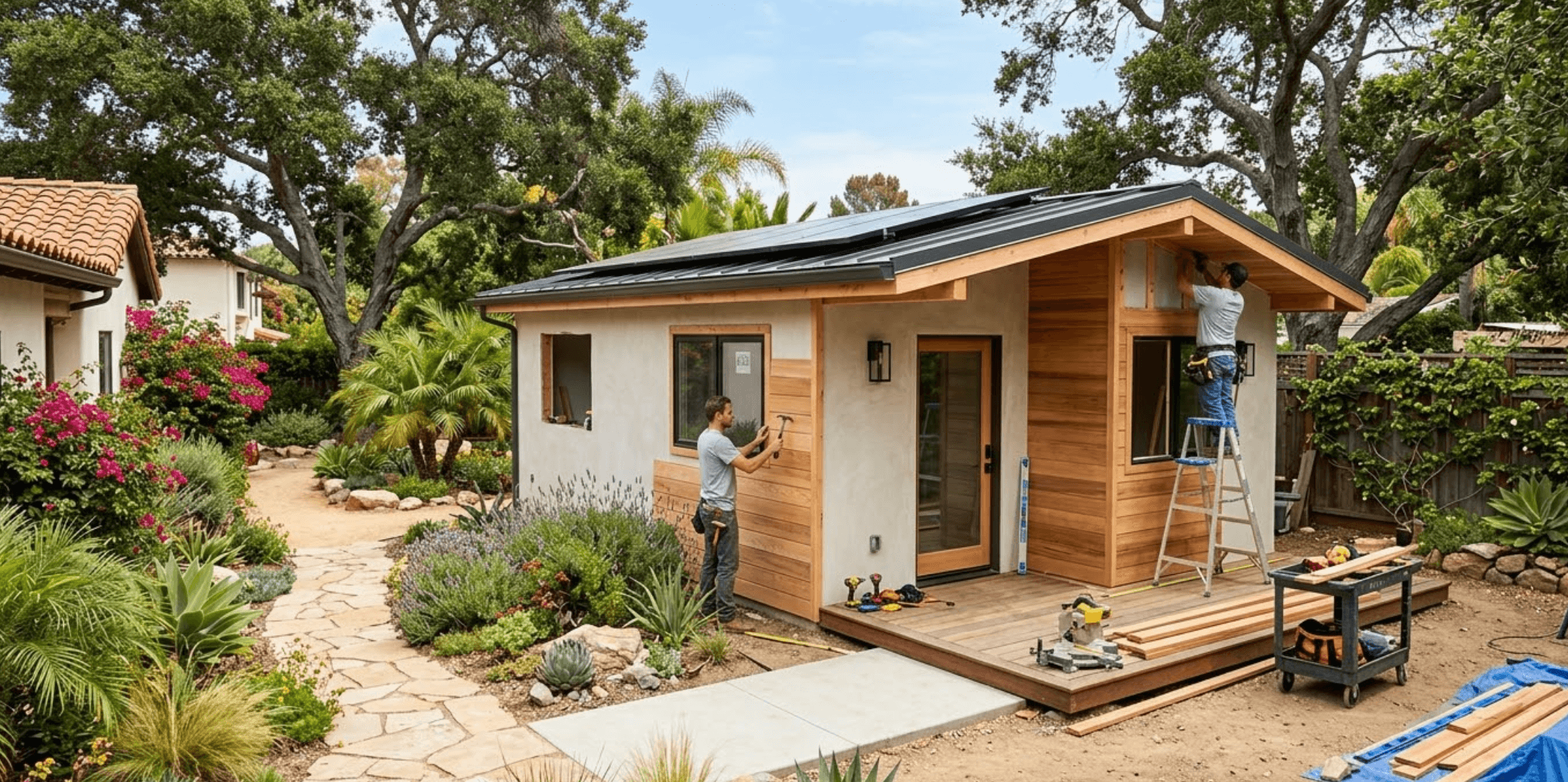
Almost every California homeowner with a single-family or multifamily lot can build an ADU. State law guarantees an 800 sq ft unit with 4 ft side and rear setbacks, requires cities to approve or deny a complete application within 60 days, and bans owner-occupancy rules for ADUs. The real work is matching your lot and budget to your city's rules, then getting a clean permit set through plan check.
Key takeaways
- ›A single-family lot can have up to three units: a conversion ADU, a JADU, and a new detached ADU of up to 800 sq ft.
- ›Cities must decide on completeness within 15 business days and approve or deny within 60 days (SB 543).
- ›ADUs under 750 sq ft pay no impact fees; ADUs and JADUs of 500 sq ft or less skip school fees.
- ›The CalHFA $40,000 ADU grant has been closed since December 2023, so plan on equity, loans or cash.
What is an ADU in California?
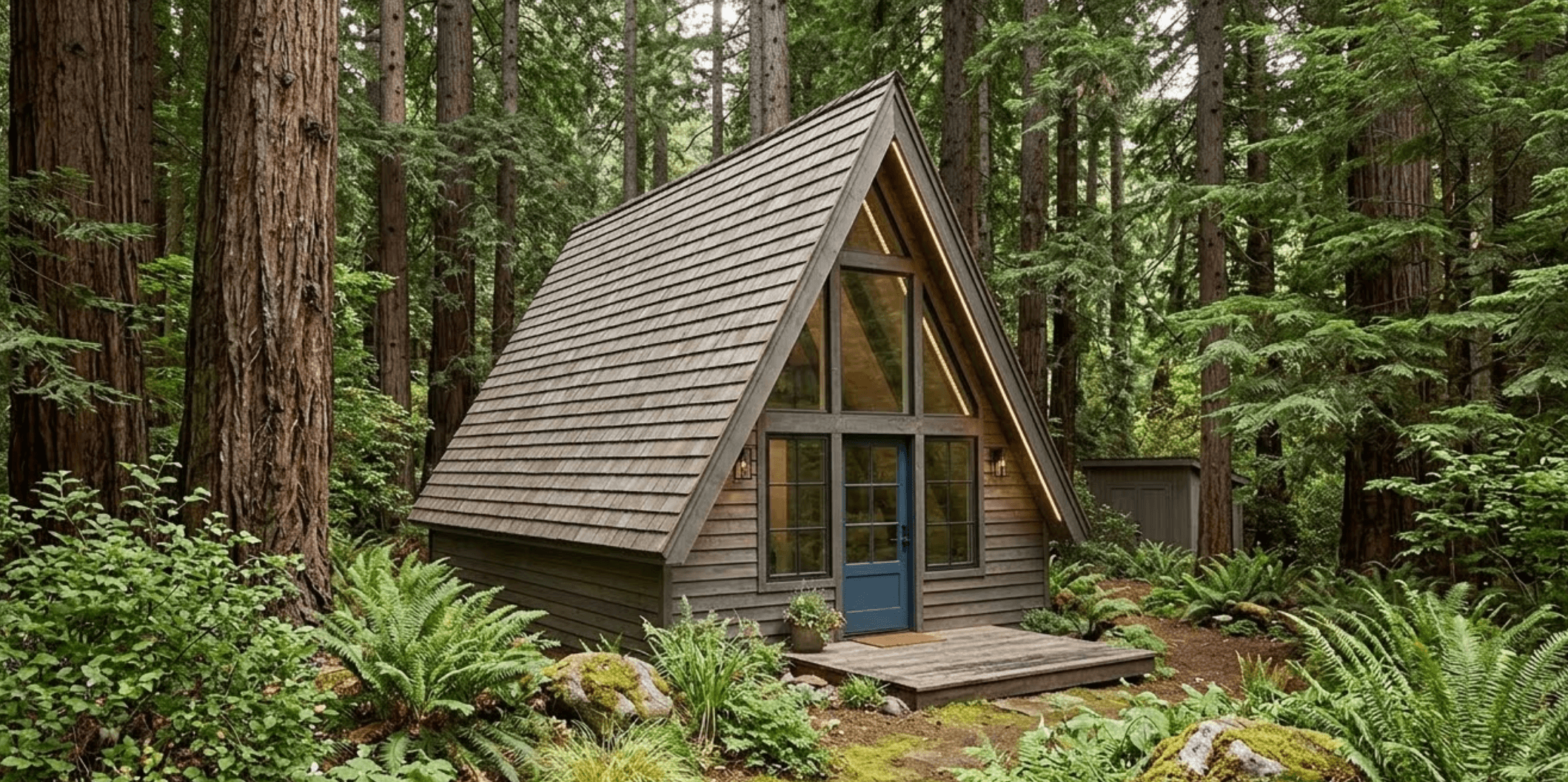
An accessory dwelling unit is a second home on the same lot as a house or apartment building, with its own entrance, kitchen and bathroom. The types:
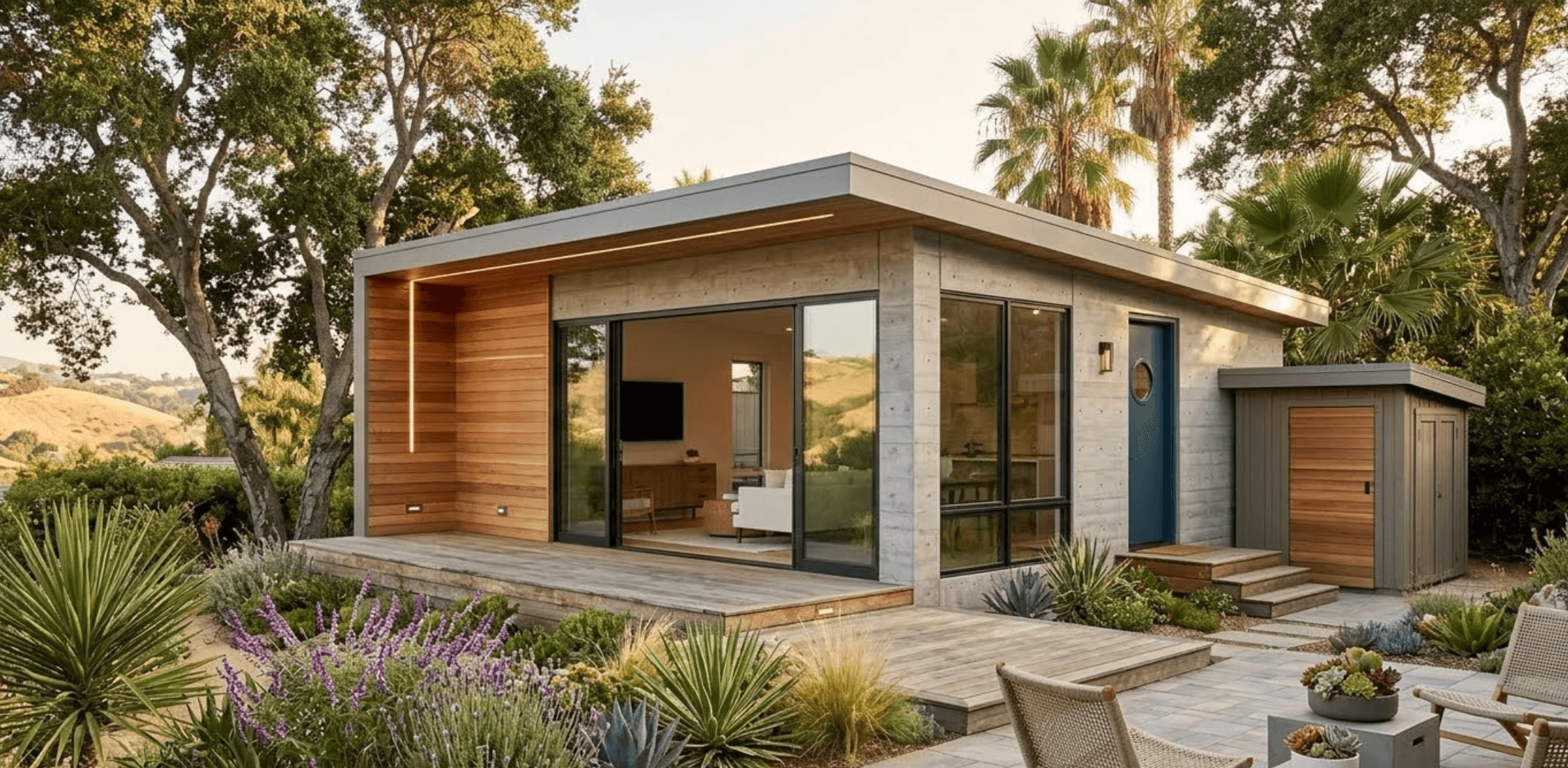
- ›Detached ADU: a freestanding unit, usually in the backyard
- ›Attached ADU: an addition that shares a wall with the main home
- ›Conversion ADU: existing space such as a garage, basement or accessory building turned into a unit
- ›JADU (junior ADU): up to 500 sq ft inside a single-family home, with at least an efficiency kitchen
Our guide to ADU types compares them in detail.
How many ADUs can you build on one lot?
On a single-family lot, Gov. Code §66323 allows one ADU converted from existing space, one JADU, and one new detached ADU of up to 800 sq ft: three units plus the main house.
On a multifamily lot, SB 1211 (2024) allows up to 8 detached ADUs (never more than the existing units) plus conversions for up to 25% of existing units. See ADUs on multifamily property.
If you want more units or a separate lot to sell, compare the ADU route with a lot split in SB 9 vs. ADU.
What does state law guarantee, and what can your city decide?
State law sets a floor that every city must meet:
- ›Size: 800 sq ft always allowed; local maximums no lower than 850 sq ft (studio or one bedroom) or 1,000 sq ft (two or more bedrooms). Most cities set 1,200 sq ft.
- ›Height: at least 16 ft for detached ADUs; 18 ft within half a mile of major transit (plus 2 ft to match roof pitch) or on a lot with a multistory multifamily building; 25 ft or the zone limit for attached ADUs.
- ›Setbacks: no more than 4 ft on the sides and rear; conversions of legal structures need none.
- ›Parking: none within a half-mile walk of transit, in a historic district, or for a conversion; lost garage spaces need not be replaced.
- ›Sprinklers: only if the main home is required to have them.
- ›Owner-occupancy: never for an ADU (AB 976). For a JADU, only if it shares a bathroom with the main home (AB 1154). JADUs cannot be short-term rentals.
Cities can be more generous: Sacramento lets detached ADUs reach the zone height (35 ft in R-1), and San Jose allows 24 ft for two stories. Cities also set objective design standards and extra coastal or historic review; Long Beach requires an administrative coastal permit on Coastal Zone lots. Check your city on the California hub or line cities up with compare.
How does the ADU permit process work?
- ›Confirm the rules for your lot: zone, setbacks, easements, overlays, fire hazard zone.
- ›Choose a design: custom, city pre-approved, or prefab.
- ›Submit plans. The city has 15 business days to say whether the application is complete, or it is deemed complete.
- ›Plan check: approval or denial within 60 days, with no hearing. Expect one or two rounds of corrections.
- ›Pay fees, pull the permit, and build, with inspections at each stage.
- ›Final inspection and certificate of occupancy.
Under AB 1332, every city must offer pre-approved detached ADU plans, and matching plans must be approved or denied within 30 days. Fresno offers five free plans from 340 to 1,015 sq ft. Our permit process guide covers each step.
How much does an ADU cost in California?
Costs depend mostly on type, size and region. Based on our city data as of 2026:
- ›Garage conversions: roughly $75,000–$140,000 in Sacramento and $80,000–$150,000 in Los Angeles
- ›New detached ADUs: $150–$220 per sq ft in Fresno up to $400–$700 per sq ft in San Francisco
- ›Permit fees: from $3,500–$9,000 in Bakersfield to $8,000–$35,000 in San Francisco
Site work (slopes, utility runs, panel upgrades) is where budgets break, so add a 10–15% contingency. Our full ADU cost guide, the cost calculator and the permit fee estimator go deeper.
Worked example: a 700 sq ft backyard ADU in Los Angeles
Using our Los Angeles data (as of 2026):
- ›Rules: detached ADUs up to 1,200 sq ft and 16 ft tall, 4 ft side and rear setbacks, no parking within half a mile of transit.
- ›Construction: 700 sq ft at $250–$400 per sq ft is about $175,000–$280,000.
- ›Permits: LA's fee range is $5,000–$25,000. At 700 sq ft the unit is under 750 sq ft, so no impact fees apply. It is over 500 sq ft, so school fees can still apply.
- ›Timeline: 60 days for ministerial review, or about 21 to 30 days through LADBS's Standard Plan Program with a pre-approved design.
- ›Rent: LA ADUs rent for $1,800–$4,500 per month in our data, depending on size and neighborhood.
Test your own numbers in the ROI calculator.
How can you pay for an ADU?
Most homeowners use a HELOC, a cash-out refinance, a construction or renovation loan (some lenders lend against the home's value after the ADU is built), or cash.
The CalHFA ADU Grant Program has been closed since December 2023, with no new round announced. Some cities run their own programs; Santa Rosa offers ADU fee deferral. Compare payments with the financing calculator and read ADU financing 101.
How much rent can an ADU earn?
Our city data (as of 2026) shows ADU rents of $900–$1,600 per month in Fresno, $1,800–$4,500 in Los Angeles and $2,200–$5,500 in San Jose. See ADU rental income, and if you are weighing a future sale, can you sell an ADU separately (condo sale under AB 1033 is a local opt-in).
What if you already have an unpermitted ADU?
Under AB 2533 (2024), an ADU built without permits before 2020 can be legalized, and the city cannot deny it for code violations unless the unit is a health and safety hazard. See how to legalize an unpermitted ADU.
Sources
- ›HCD: Accessory Dwelling Units
- ›HCD Accessory Dwelling Unit Handbook
- ›Gov. Code §66323: units per lot
- ›Gov. Code §66317: permit timelines
- ›Gov. Code §66324: impact and school fees
- ›Gov. Code §65852.27: pre-approved ADU plans (AB 1332)
- ›AB 1154 (2025): JADU owner-occupancy
- ›City of Los Angeles: About ADUs
- ›LADBS: Approved ADU Standard Plans
Free Service
Ready to Start Your ADU Project?
Get free quotes from licensed ADU contractors in your city. No obligation, takes 2 minutes.
Get Free Contractor Quotes